The short answer
There is no single answer for Woodland Hills; selling is a property-specific decision that depends on home type, condition and local trends.
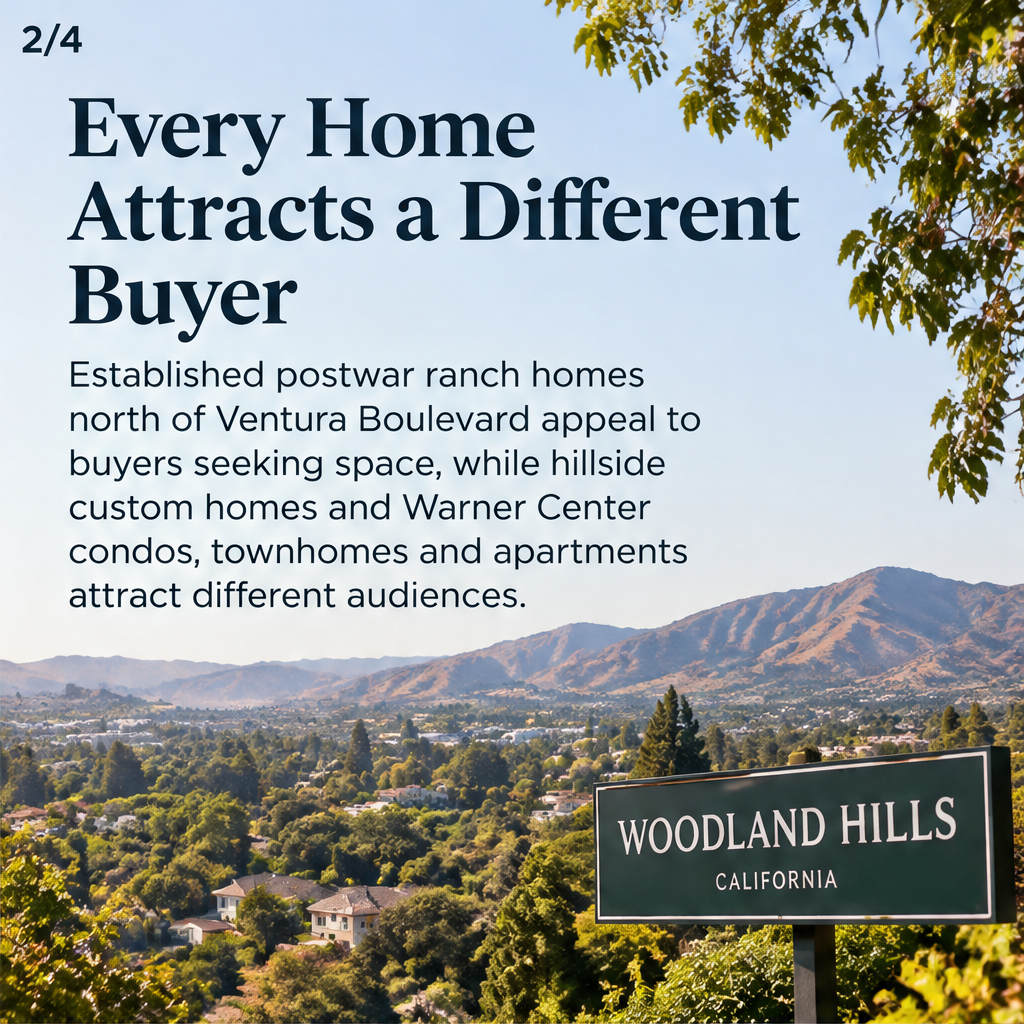
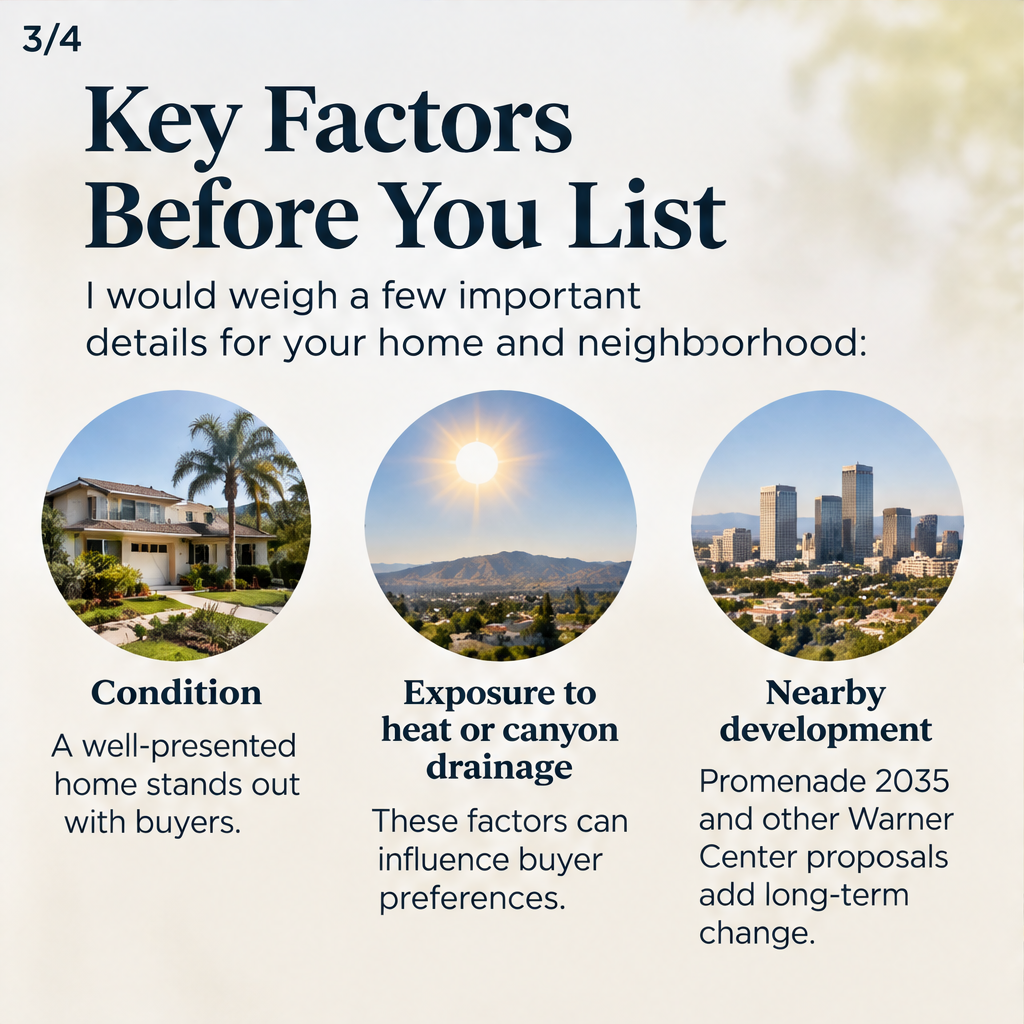
Established postwar ranch homes north of Ventura Boulevard, hillside custom houses, and Warner Center condos or townhomes each attract different buyers, so weigh condition, exposure to heat or canyon drainage, and nearby development such as Promenade 2035 before setting price and timing. Use a local comparative market analysis and a targeted presentation to test readiness.
Updated


What counts as a good time to sell a home in Woodland Hills, CA?
A good time to sell in Woodland Hills, CA is when the specific home’s condition, buyer demand for its type, and local factors align to support the seller’s price and timeline. This differs from broad market statements because timing for Woodland Hills depends on whether the property is a postwar ranch north of Ventura Boulevard, a hillside custom house, or a Warner Center condo or townhome. Local proposals and physical exposures can change buyer preferences more than general regional trends.
7 things to know about selling in Woodland Hills, CA
1) Selling is property-specific, not one-size-fits-all
Selling in Woodland Hills depends on the home’s category: postwar ranch homes north of Ventura Boulevard attract buyers looking for space, hillside custom homes appeal to buyers focused on views and privacy, and Warner Center condos or townhomes draw different audiences. Match marketing to the right buyer profile rather than relying on a single neighborhood message.
2) Condition matters first
Buyers notice maintenance, systems and visible wear. Investing selectively in repairs, decluttering and neutral cosmetic updates usually improves buyer interest and can reduce time on market. Consider a pre-listing inspection to identify issues that might affect offers.
3) Physical exposures influence buyer decisions
Sellers should weigh exposure to heat and canyon drainage, which can affect livability and insurance or retrofit needs. Homes with known drainage or extreme-heat exposure may need disclosures or mitigation before listing; speak with county or city permits offices and a qualified inspector to confirm risk and remedies.
4) Nearby development can shift demand
Long-term proposals such as Promenade 2035 and other Warner Center plans introduce change that affects pricing and buyer preferences. Consider whether prospective buyers will value future density and amenities or prefer quieter pockets when setting timing and price.
5) Price and presentation must be tailored
Comparative market analysis should be specific to the property’s immediate submarket and type. Presentation — photography, floor plans and targeted advertising — should highlight the features that the likely buyer for that property type cares about most.
6) Financing and buyer profiles vary by home type
Warner Center condos, apartments and townhomes may attract buyers using different loan products than single-family buyers north of Ventura Boulevard. Expect variations in financing timelines and qualification hurdles and plan inspections, appraisals and contingency periods accordingly.
7) Professional advice reduces uncertainty
Talk to a local listing agent for a neighborhood-specific market analysis, a lender about likely buyer financing, and the city or county about permits or planned projects. For legal or tax questions, consult a lawyer or tax professional.
How to decide whether to list — step by step
- Identify the property type and immediate submarket in Woodland Hills: classify the home as a postwar ranch north of Ventura Boulevard, a hillside custom home, or a Warner Center condo/townhome/apartment.
- Gather condition information: order or review recent inspections, note heat exposure or canyon drainage issues, and list repairs that would materially affect saleability.
- Obtain a local comparative market analysis: have an agent pull recent comparable sales and active listings for the same property type and block.
- Assess nearby development and planning: review known proposals such as Promenade 2035 and check the city or county planning office for pending projects that could affect demand.
- Estimate net proceeds and carrying costs: work with a lender or financial advisor to model selling costs, outstanding mortgage payoff, and expected closing timeline.
- Decide on timing and presentation: choose whether to list now, after targeted repairs, or after a planned neighborhood change becomes clearer; prepare marketing with photos and disclosures.
- Set contingencies and buyer guidance: prepare required disclosures, set realistic contingency periods for inspections and appraisals, and coordinate with a title or escrow officer.
- List and monitor feedback: list with a clear strategy, track showings and offers, and be ready to adjust price or presentation based on market responses.
| Item | Why it matters | Who to ask | Action |
|---|---|---|---|
| Postwar ranch north of Ventura Boulevard (example) | Appeals to buyers seeking space and lot size | Local listing agent; home inspector | Highlight usable yard and floorplan; address systems and curb appeal |
| Hillside custom home | Buyers prioritize views, slope stability and access | Geotechnical or structural engineer; city planning | Document site stability, permits and view rights; market to privacy/amenity buyers |
| Warner Center condo/townhome | Attracts different finance types and amenity-focused buyers | HOA manager; lender familiar with condos | Provide HOA docs, highlight building amenities and commute options |
What's different in California?
California-level rules affect disclosures, environmental hazards and licensing when selling a home in Woodland Hills. Sellers must follow state disclosure requirements and wildfire or geological hazard guidance where applicable; check current details with the California Department of Real Estate and state hazard or forestry agencies. For permits, development questions, and local land-use changes such as Warner Center plans, check with the City of Los Angeles planning department and Los Angeles County offices.
Common mistakes
- Assuming neighborhood-wide timing applies: treating Woodland Hills as one market instead of separating property types and submarkets.
- Skipping an inspection or ignoring heat/drainage exposure: undisclosed site issues can delay sale or reduce offers.
- Underestimating nearby development impact: failing to factor in projects like Promenade 2035 when pricing and timing.
- Poorly targeted presentation: marketing a Warner Center condo the same way as a ranch house north of Ventura Boulevard.
Frequently asked questions
How do I know if my Woodland Hills home should be listed now or later?
Decide whether to list in Woodland Hills by matching your home’s type and condition with local demand. For postwar ranch homes north of Ventura Boulevard, buyers often value space; hillside homes and Warner Center units attract different buyers. Review a local comparative market analysis, inspect for heat or canyon drainage exposure, and factor in nearby development before choosing timing.
What specific local factors in Woodland Hills affect sale timing?
Local factors that affect sale timing in Woodland Hills include the home’s exposure to heat or canyon drainage, its category (postwar ranch, hillside custom, Warner Center condo/townhome), and plans such as Promenade 2035. These elements influence buyer preferences, required disclosures, and marketing approach.
Who should I consult about planned development like Promenade 2035 and how it affects my sale?
Consult the city planning department and a local listing agent to understand how Promenade 2035 and other Warner Center proposals might affect demand and pricing. For legal or financial implications, speak with a lawyer or tax advisor.
What if my Woodland Hills property has canyon drainage or heat exposure?
If a Woodland Hills property has canyon drainage or heat exposure, obtain professional inspections and document mitigation steps. Disclose known issues to buyers and check with county or city permitting offices about required remedial work or permits before listing.
Who decides or who pays for fixes identified before selling in Woodland Hills?
Who decides and who pays for pre-sale fixes in Woodland Hills depends on negotiations between seller and buyer and on any legal requirements. Sellers commonly complete repairs needed for marketability; buyers may request repairs in contingencies. For structural or permit-related items, consult a contractor and the city or county office.
How should I price different types of Woodland Hills homes?
Price Woodland Hills homes using a comparative market analysis targeted to the specific submarket: use comps for postwar ranches north of Ventura Boulevard for similar lots, compare hillside custom homes to other slope properties, and use recent Warner Center condo sales for multiunit pricing. Adjust for condition, exposures and pending local projects.
Official sources
- City of Los Angeles Planning Department — local planning, permits and development proposals
- Los Angeles County — county services, flood control and property records
- California Department of Real Estate — state disclosure rules and licensing
- California Department of Forestry and Fire Protection (CAL FIRE) — wildfire hazard and preparedness information

About the agent
Lily Bayat
Woodland Hills, California · Beverly & Company, Inc.
Lily Bayat is a Realtor® with Beverly & Company in Calabasas, bringing over a decade of real estate experience to Los Angeles County. She works with first-time buyers, downsizers, families, investors, luxury buyers, seniors, and everyone in between—helping each person find exactly what they need. What drives Lily is simple: she loves watching clients achieve their goals and seeing that satisfaction firsthand. She's patient, honest, and genuinely caring, with strong negotiation skills and deep market knowledge.
General information only, not legal, tax, financial or insurance advice. Rules and products change; confirm details with a licensed professional or your local authority.